Running is the world’s most accessible sport, yet 46% of recreational runners get injured each year.
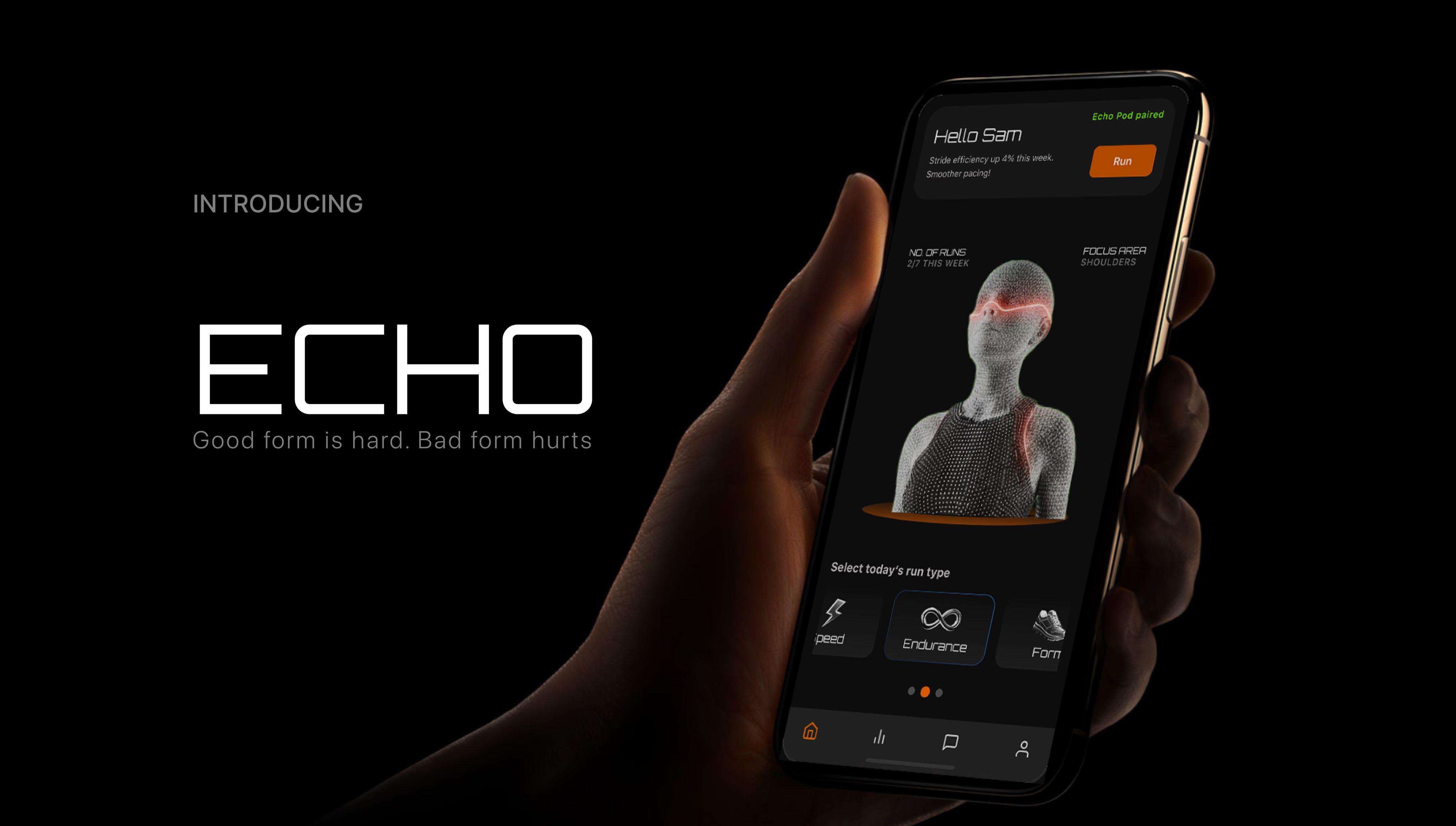
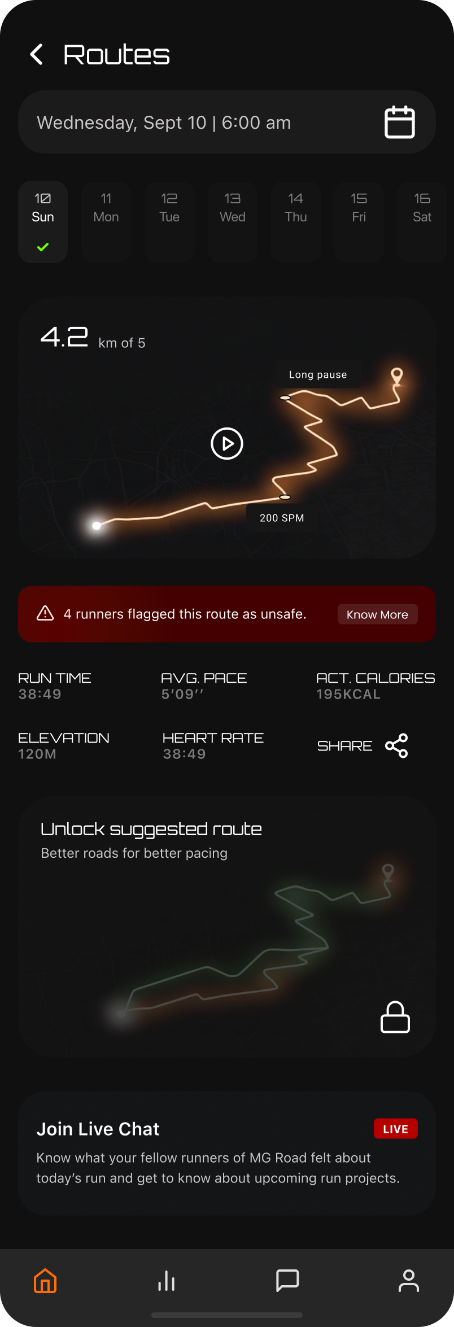
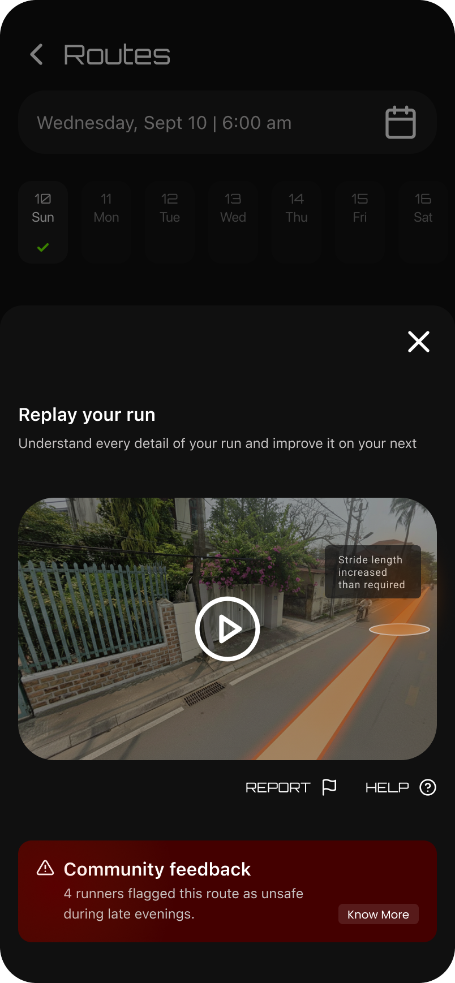
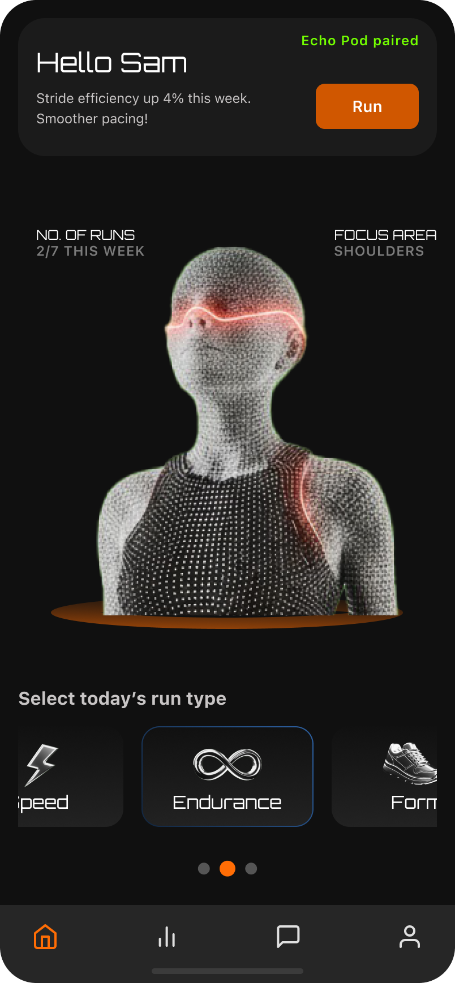
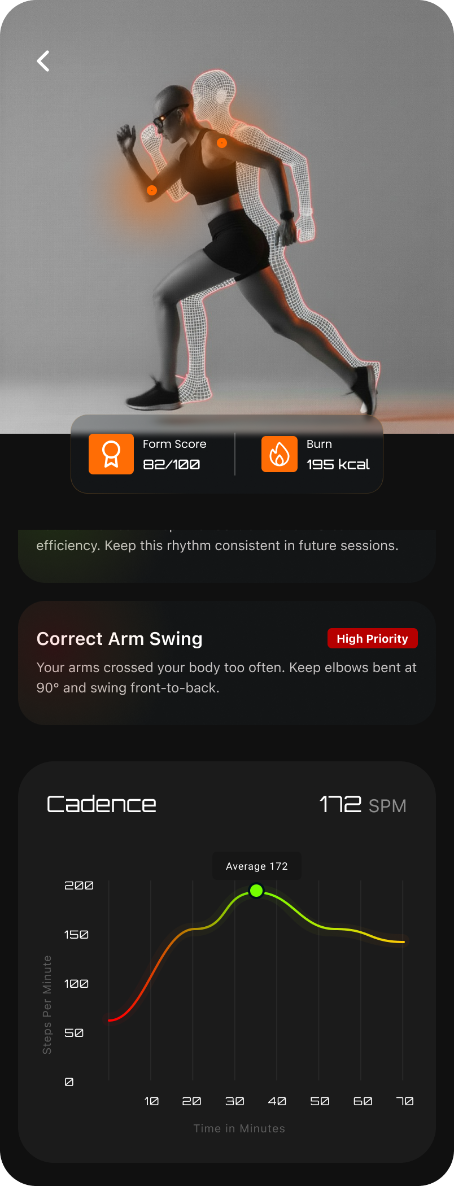
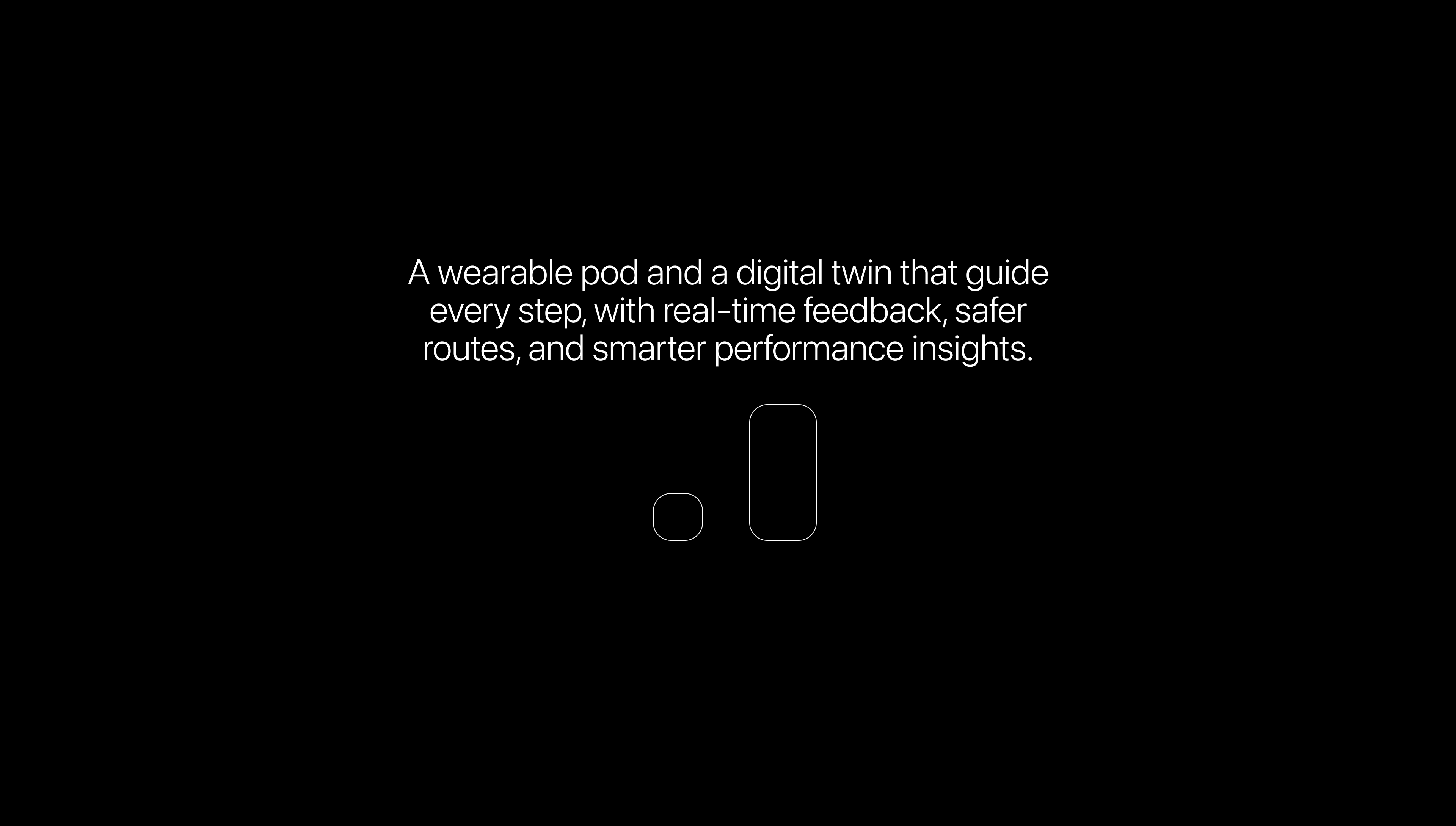
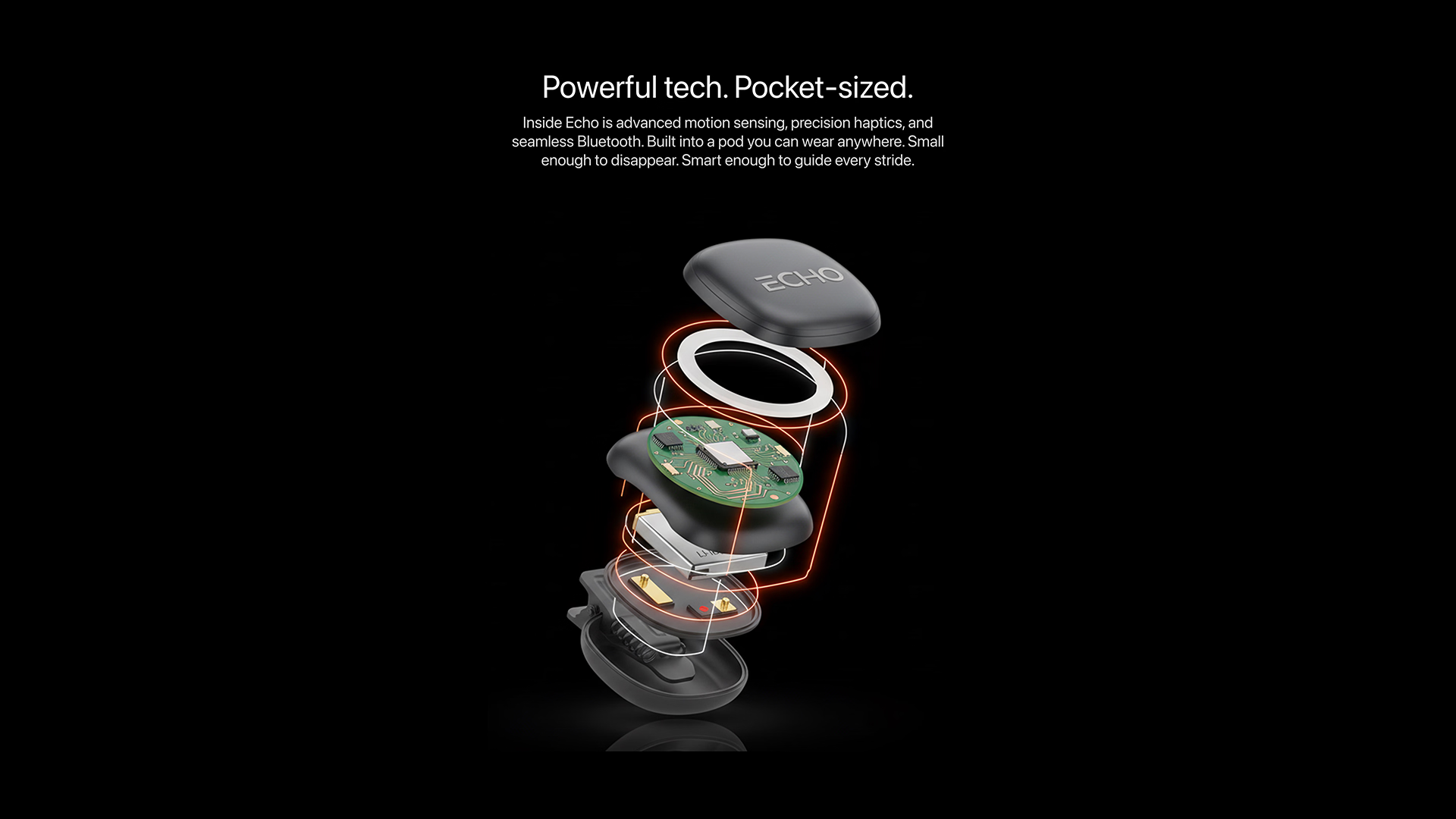
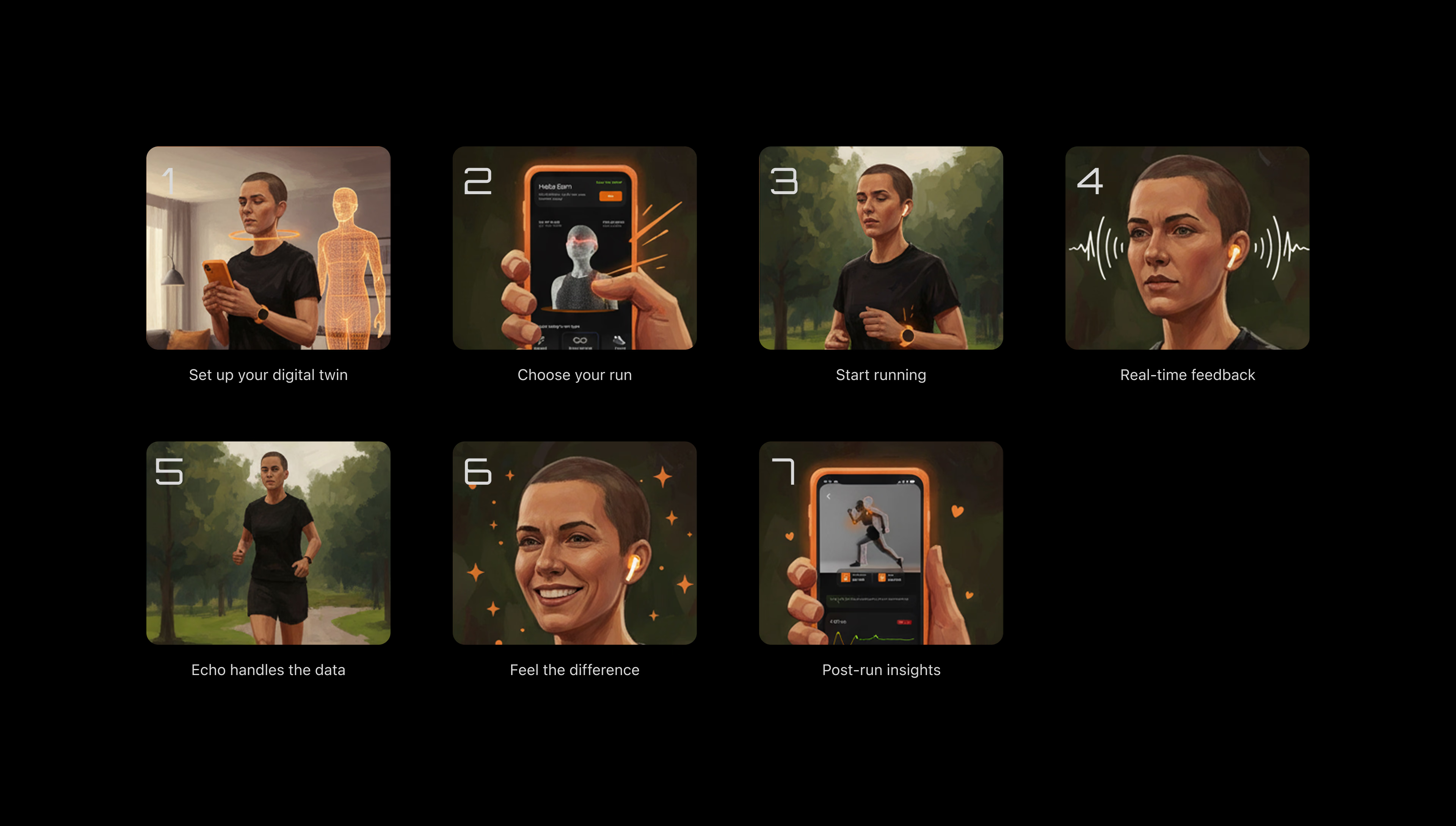
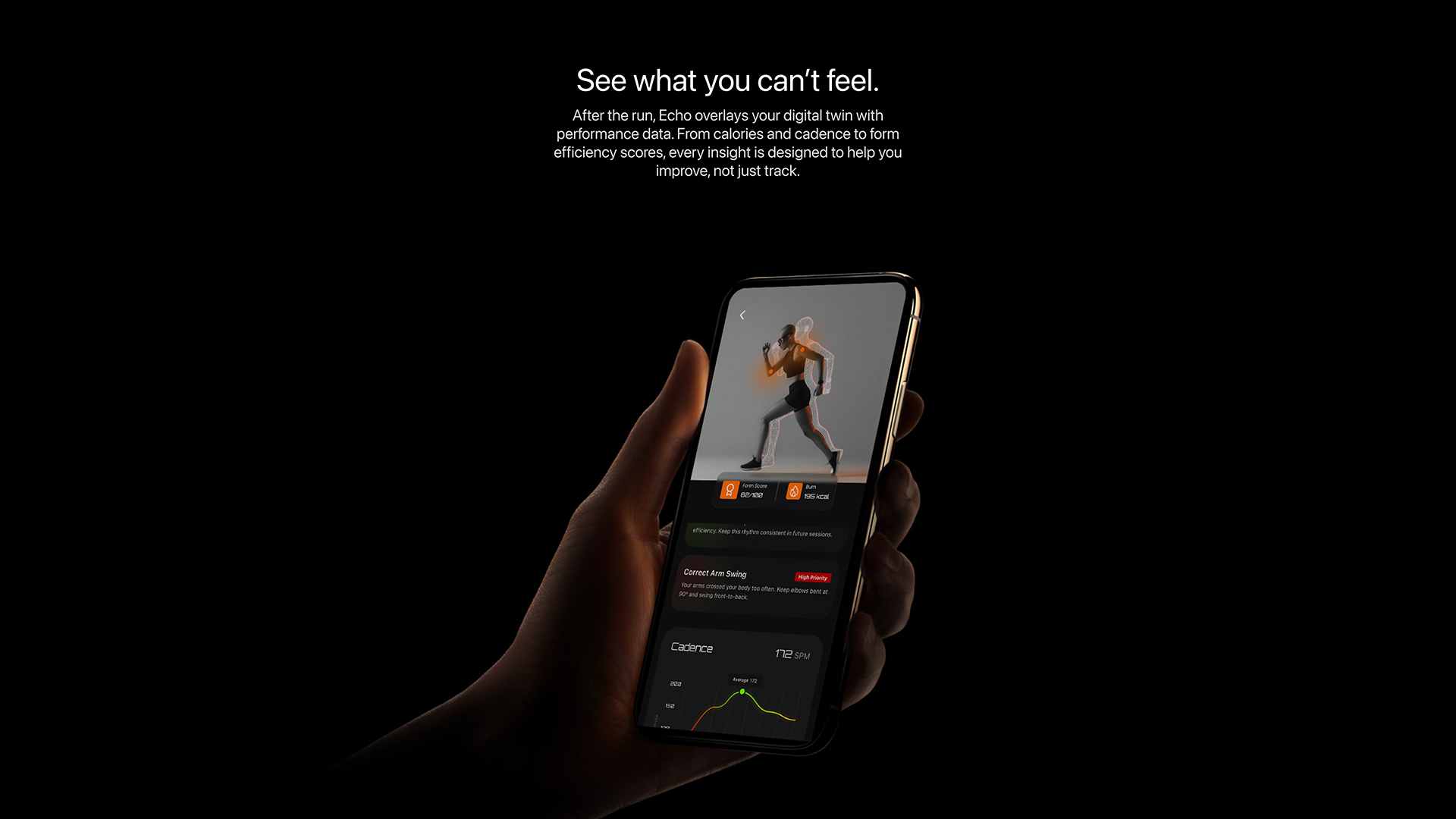
This project explores how design can go beyond simple data tracking to deliver real-time visibility and actionable guidance, helping runners improve form and reduce the risk of injury.
This project explores how design can go beyond simple data tracking to deliver real-time visibility and actionable guidance, helping runners improve form and reduce the risk of injury.
Teammates
Sushmitha Nair
Services
Augmented Reality | UI & UX Design
Industries
Health & Wellness
Date
September 2025
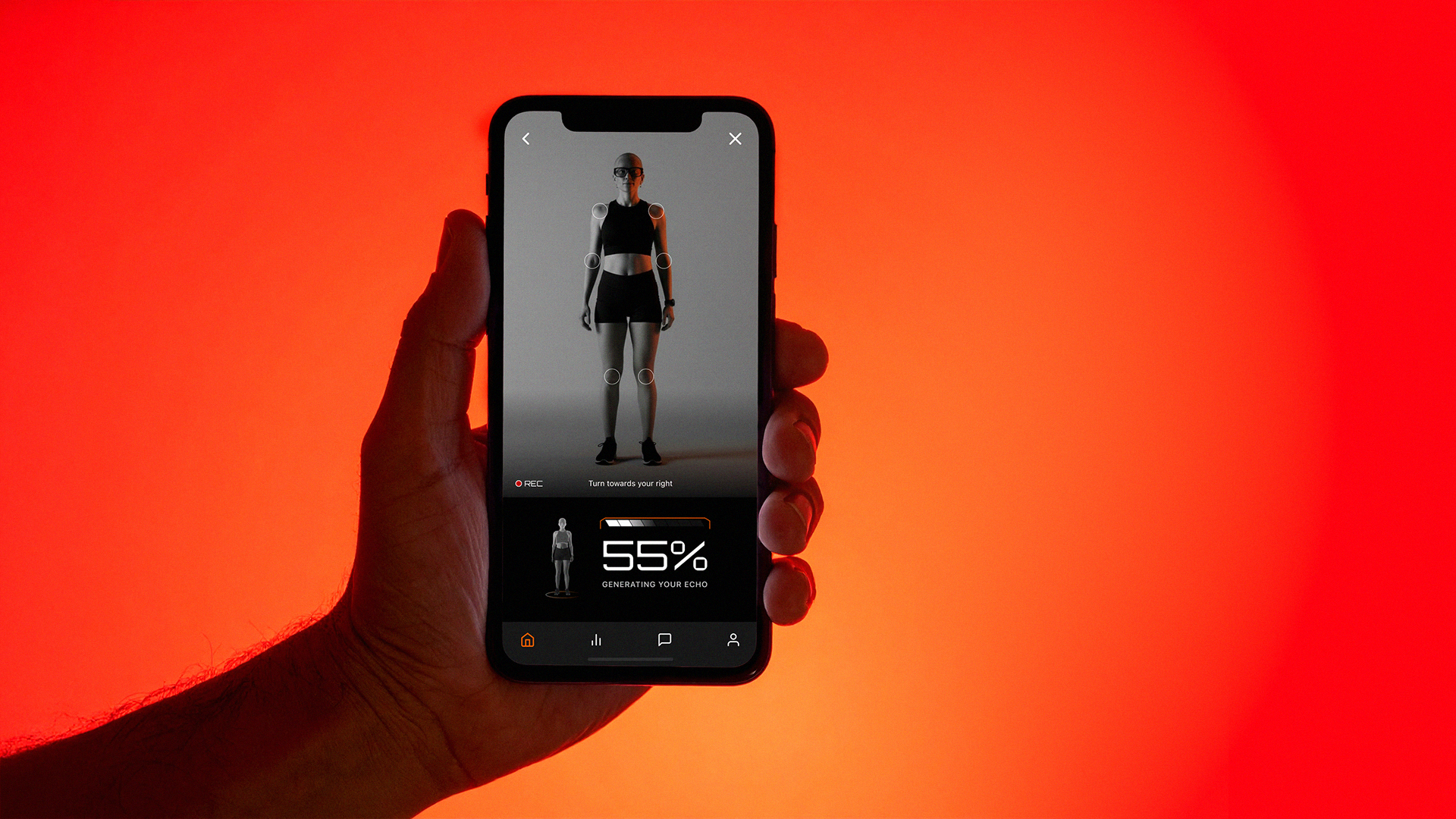
Running is one of the most accessible sports in the world.
Nearly 1 in 2 recreational runners get injured each year from poor form.
Nearly 1 in 2 recreational runners get injured each year from poor form.
Ipsos, 2021; Nielsen, 2020 | THE CONTEXT
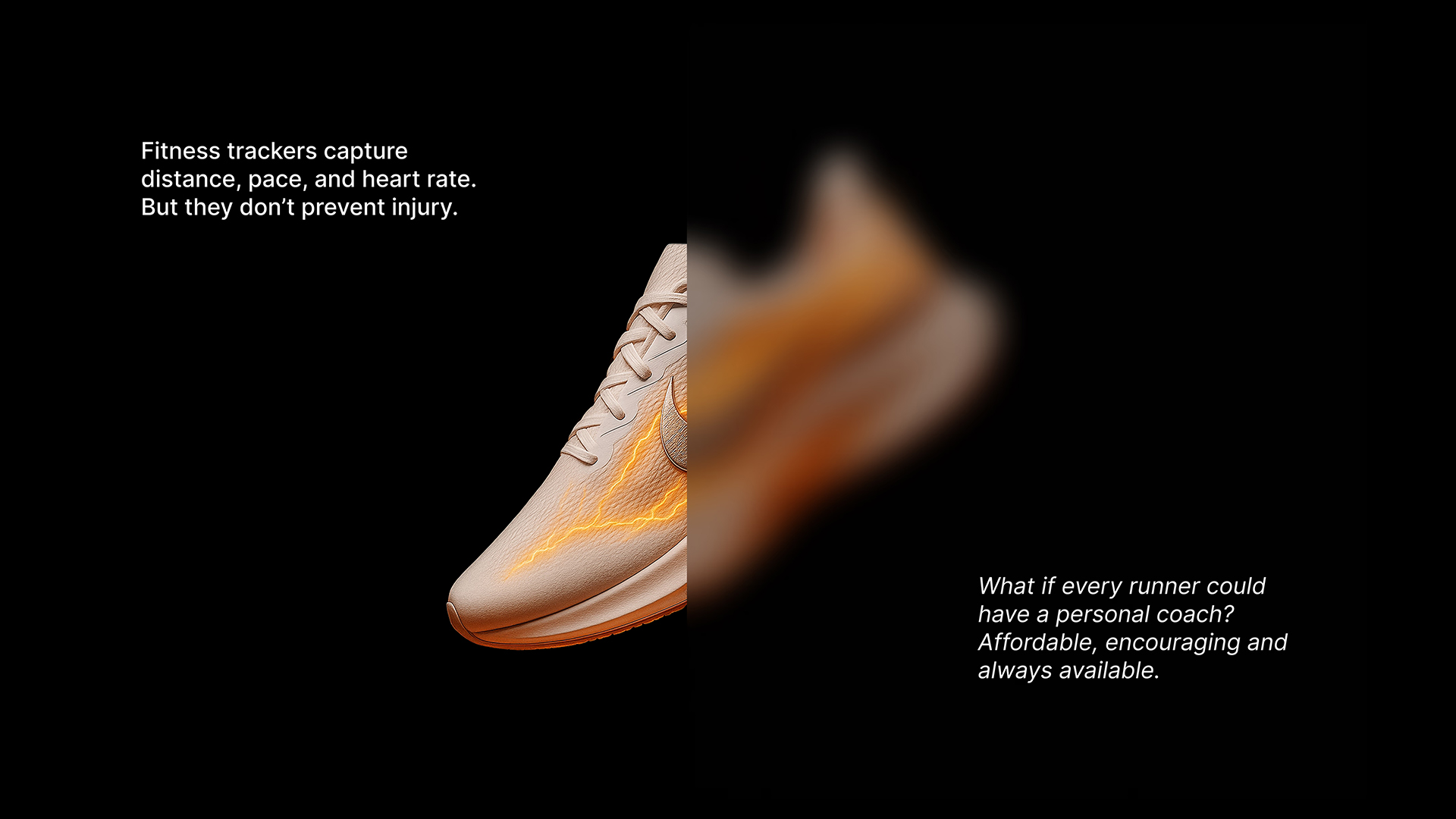
Bad form stays invisible until it causes pain, post-run graphs don’t help mid-stride, and hiring a coach is expensive.
THE CHALLENGE
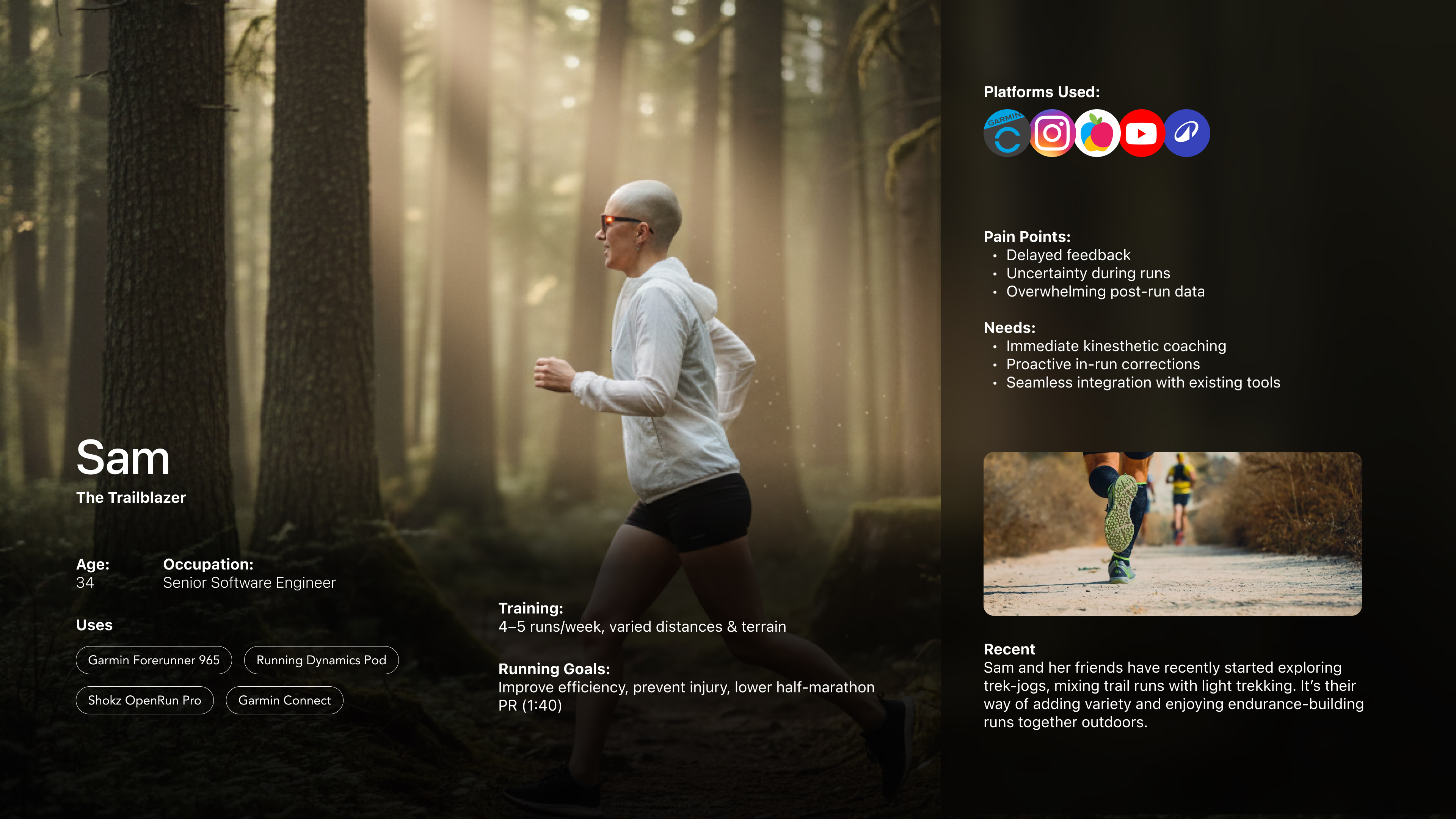
We spoke to 10 amateur runners, 3 semi-professional athletes, and a physiotherapist.
THE DISCOVERY
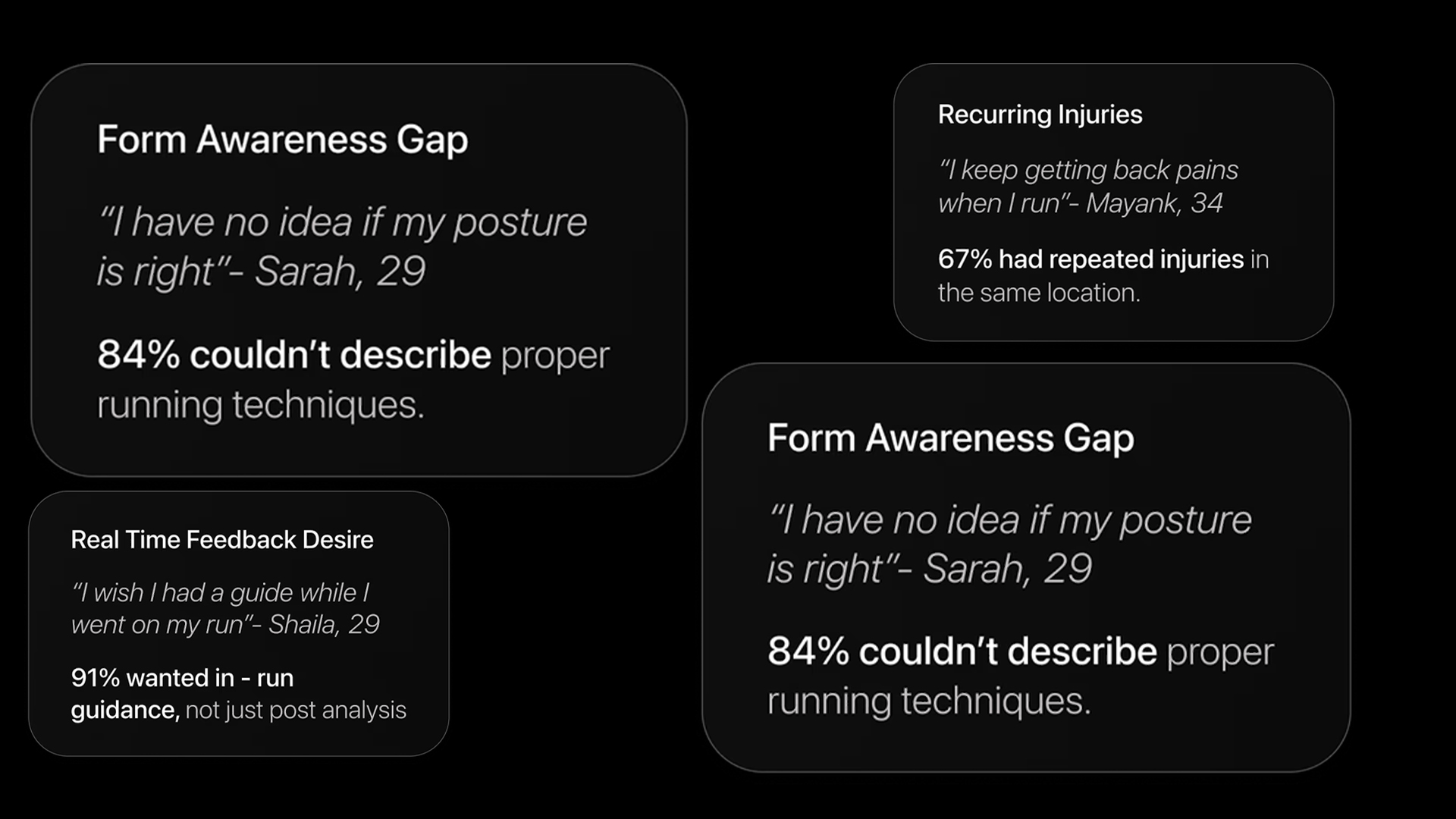
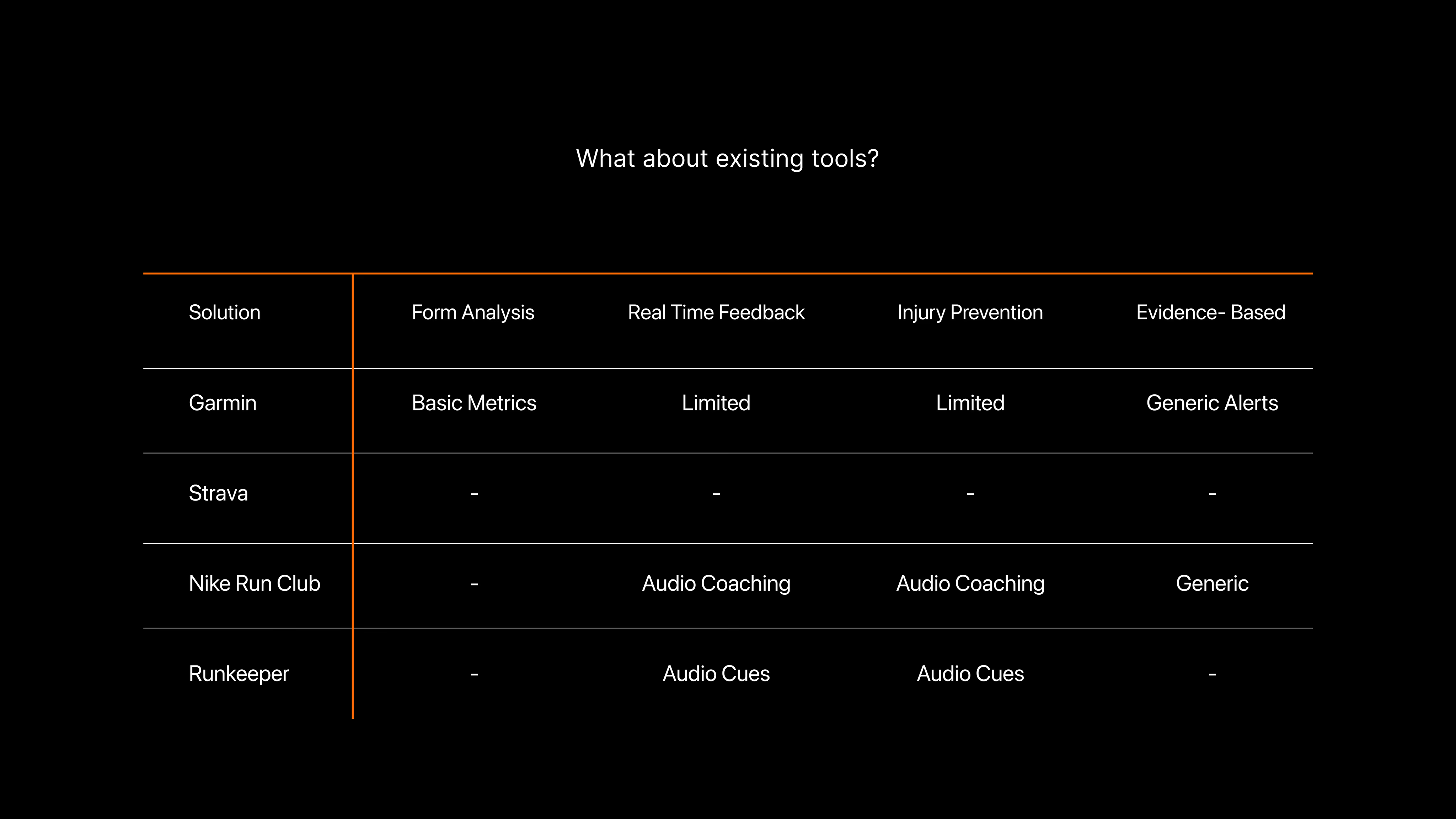
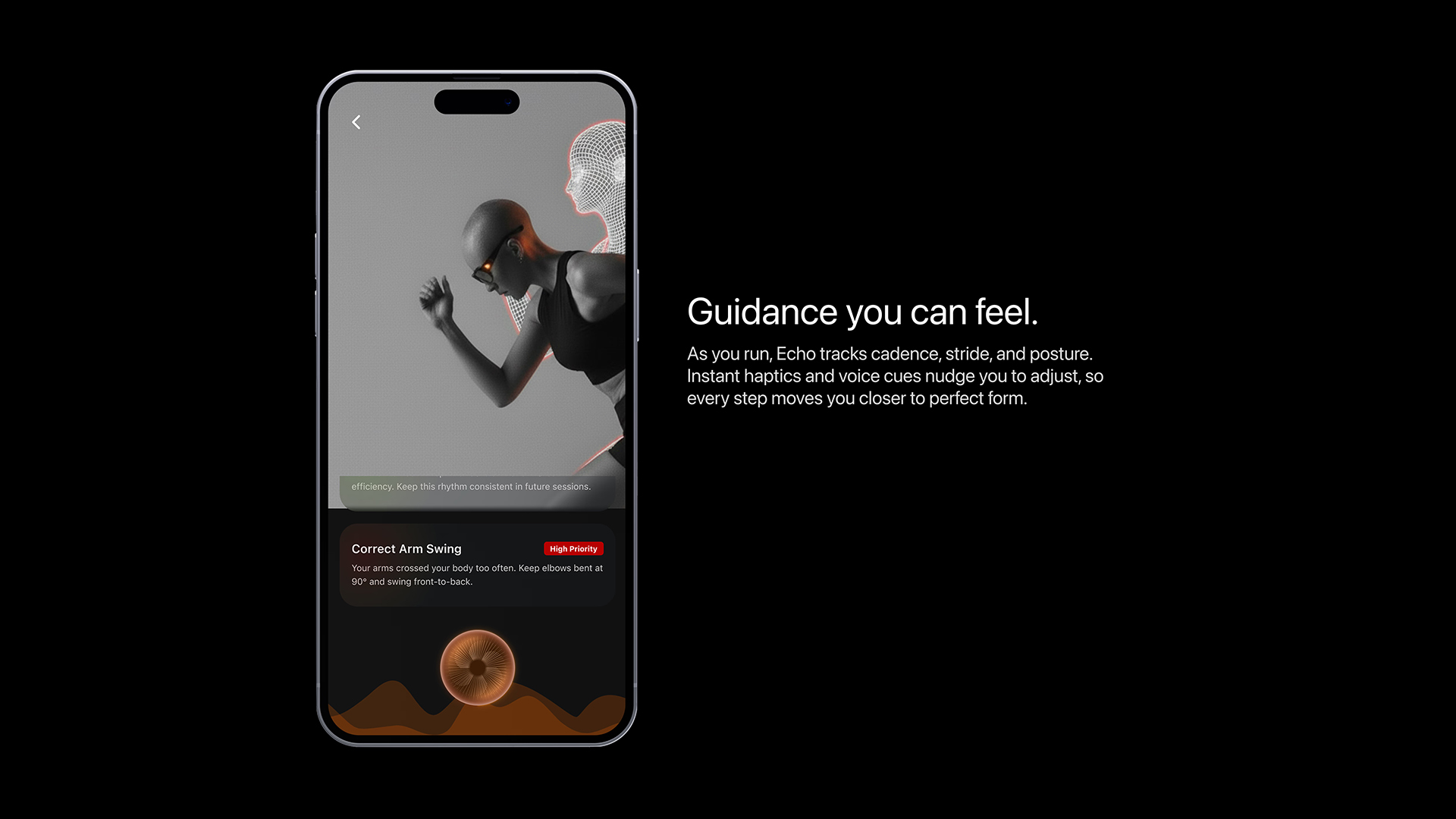
Runners don’t need more numbers. They need timely, simple, encouraging cues mid-stride, when behaviour can actually change.
THE INSIGHT
- Individual Impact
-
Injury prevention through real-time coaching
Boosts motivation + confidence with measurable progress
Enables safer exploration of new terrains (trail, urban, long-distance)
- Community Impact
-
Shared running insights → motivates group runs
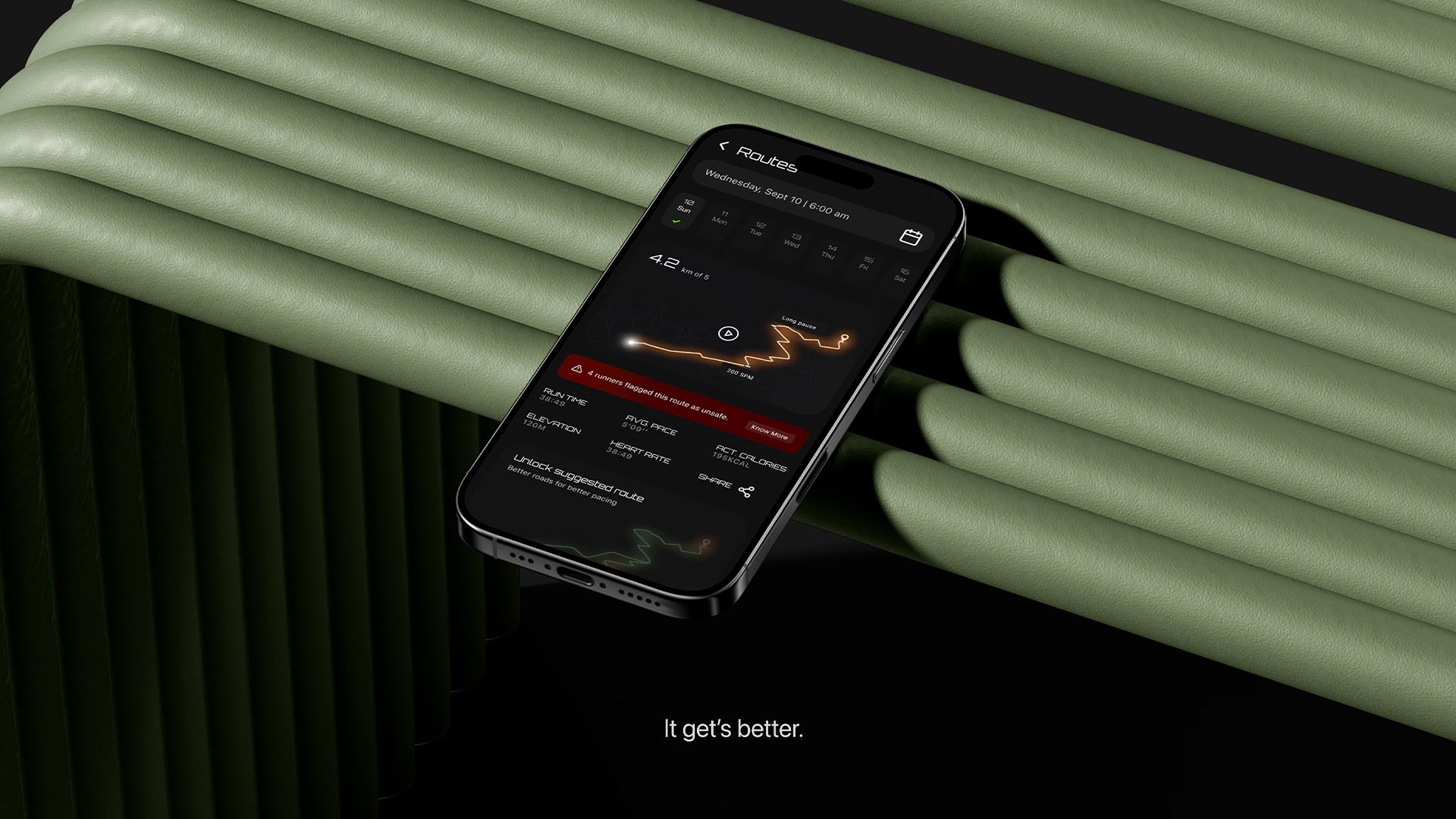
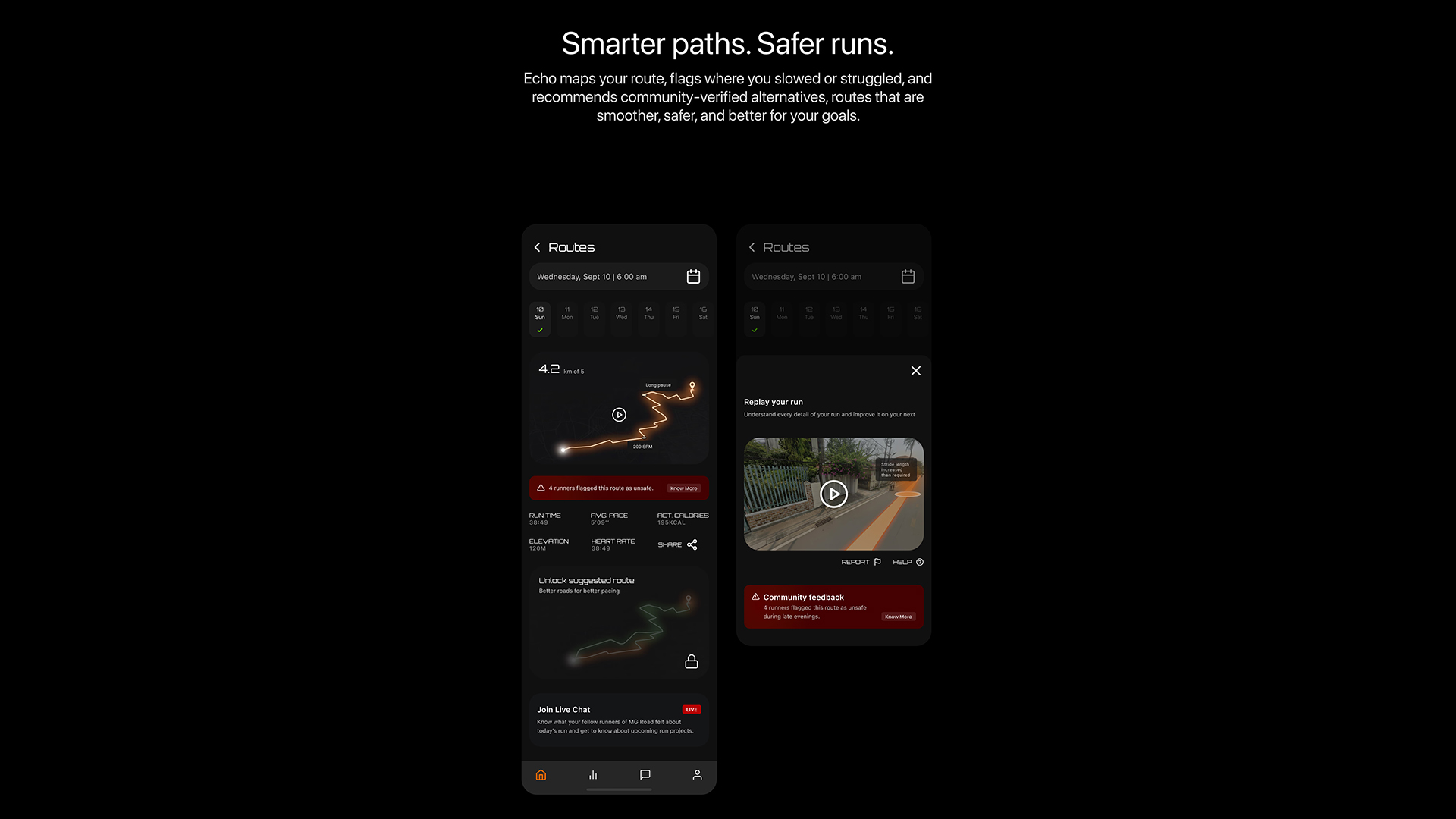
Safer running routes collectively mapped
Builds stronger bonds through shared progress and encouragement
- Global Impact
-
Democratizes access to coaching without expensive trainers
Promotes healthier, more active lifestyles worldwide
Encourages safer, greener mobility by normalizing running/walking as transport